Showing posts with label Health and fitness. Show all posts

Sunday, June 5, 2016

Hello world, it's me

Good morning (or afternoon, middle of the night, wherever you may be) my kitten cats!

Its been a hot minute since I last posted - nearly a year to be exact. I've been meaning and wanting to get back into the grove of blogging so I figured that a little update would bring all of you back to speed on what's been going on in my little corner of the universe.

First of all, I just want to thank everyone who has emailed me in the last several months making sure I was still okay. Y'all are so incredibly thoughtful and thank you for all your concerns and I'm sorry if I haven't gotten back to everyone yet. I've been fantastic actually - incredibly blessed to be so busy in this season of life, which is why blogging has been put on the back burner.

But back to the regularly scheduled programming. In the last year I have:

...completed my junior year of college. That's right, one more year (and 12 credits actually) before I graduate with my Bachelor's of Science! The game plan for now is to immediately go to grad school and work towards a Master's of Public Health or Nutrition (maybe both?!?!) so GRE studying is in full swing. Oh standardized testing. I thought I was done with you.


...worked, worked, worked. My friends basically I know that if they want to find me, they should probably look at The Tombs. It's the Georgetown bar that everyone goes to hang out. Ask any alumn and they'll probably have stories of all-too-many late nights there, including this nice guy:


Oh you know - it's a typical Wednesday night hanging out with my good friend Bill.

Fun fact: I've also had the privilege of serving the president of Croatia (she likes her margaritas with Cuervo and her wings with extra ranch) and former Maryland governor Martin O'Malley. It's a pretty cool job.

...competed in my first bodybuilding competition. Bikini division, actually. I ended up placing 2nd in the Open class and 3rd in Novice and totally caught the stage bug. The sparkles, the tan, the makeup, the heels...it's not for everyone but I'm certainly enjoying it. Sidenote: I've been hesitant on sharing my competition prep experiences on this blog because the reality of prep is quite unhealthy, triggering, and you have to go into it with a very stable mind, but if it's something y'all would like me to share I am more than willing to. I'm currently prepping for my next competition in the fall and absolutely can't wait to see what changes I've been able to make.

A photo posted by Xinwei (@xinweizeng) on

...spent more time on the beach than in the last five years combined. Actually, it was only two beach trips, but they have been the first times I've laid out in a bikini since before my eating disorder. But then again, prance on stage with a true "its-bitsy-teeny-weeny" but not yellow polka dotted bikini, so I guess it's only natural. And yes, I did strike a few #bikinigirl poses.


A photo posted by Xinwei (@xinweizeng) on

...ran my first 5K. The So Other's May Eat Thanksgiving Day Turkey Trot to be exact, with my favorite people #teamtombsforlyfe. I don't foresee a future as a runner though.

A photo posted by The Tombs (@thetombs) on

Fun fact, I was standing in line waiting to use the bathroom when they took this pic...and they warned me too. Bladder fail.

I guess that's all the updates for now. It's been a whirlwind of a year.

No questions today, just tell me what you've been up to!

Sunday, August 16, 2015

Not everything is completely fixed

This blog post is something that has been weighing heavily on my mind lately. Now, 99% of the thing, I try to be as positive as possible on this blog; this is a place where I want to encourage and empower people to put their health, both physical and mental, first. But at the same time, I want to be transparent and document my own recovery process.

As much as I wish that simply eating enough over a long and consistent basis and resting your body will fix all of the physical havoc that restriction does to your body, sometimes it won't. Sometimes there are demons that linger.


But don't misunderstand, eating enough is crucial and nothing will get better unless you eat enough food in the first place; frankly 90% of the physical damage can be reversed through a proper influx of calories. However, even though eating disorders and restriction are never a person's decision per say, he will still have to face the consequence that come along with it without a "get out of jail free" card.

So here's the situation: I've noticed that my digestive system is still not faring too well, even after over a year of proper eating. I get terrible cramps and bloating (similar to ones I got when I first started recovery) about once a week. There are times when I eat enough food to satisfy my hunger and 10 minutes later feel like I just ate a small country's intake when calorically and volume-wise I know that I've eaten a proper, normal amount.

The one thing that scared me the most was that about a week ago, I ate breakfast around 7 AM and an hour later developed a terrible migraine so I decided to nap a bit. I woke up a few hours later, feeling nauseous and still had a headache, but decided to do some housework and laundry. Because I felt so nauseous and didn't know if I could hold down food or not, I decided to wait a bit and have something more calorie dense later. At around 2 PM, I ended up throwing up the entire contents of the breakfast I ate 7 hours before. And it terrified me. Normal digestion should take about an hour (out of the stomach at least), but the fact that my breakfast stayed in my stomach relatively undigested for seven. whole. hours. boggles my mind. Something was not right and I couldn't kid myself anymore.


So it's almost like I'm going back to the drawing board and working to rehab my digestive system. That means:

  1. Less fiber + fiber rich foods. Whole breads, brown rice are definitely going bye-bye for a bit
  2. Less veggies. Less fiber + less volume = win-win
  3. More easily digested, hypoallergenic things like white rice
  4. More fat
  5. Taking a probiotic + putting yogurt back into my diet*
*For a while I cut out yogurt as a way to save money; Greek yogurt is expensive and I go through it like it's going out of fashion.

No questions today, just some thoughts.

Friday, July 24, 2015

Eat food.

Fun fact: I haven't read fiction in years (for pleasure at least); I'm more of a non-fiction, documentary type of gal. Lately my obsession has been Michael Pollan and three books in, I'm determined to finish all the rest he has written.


One of his most well known quotes is "Eat food. Not too much. Mostly plants" taken from In Defense of Food and he really put an emphasis on eating whole foods - not necessarily things that your grandmother or great-grandmother would recognize as food (because I don't know about you, but my great-grandmother would not recognize cheese or peanut butter at all - it's one of those Chinese things) - but rather just focusing on eating real foods rather than the summation of their parts.

I'm guilty of this too.

Macro counting is insanely popular right now, whether you follow a clean eating approach or an IIFYM approach. High protein cookies, low carb cookies, low fat cookies, cookies made with just protein powder (are you freaking kidding me?!?! Gimme the butter!!!) and of course cookies are just used as an example, but what I am saying is that foods have been broken down to a summation of their parts so that a cookie isn't just brown sugar, butter, flour, and eggs...it's carbs, fats, and maybe a gram or two of protein (unless you're talking about protein cookies).

Whew, I said 'cookie' way too many times in that sentence.

But in all honesty, I just find it slightly disordered every single recipe I've seen lately as been a healthy-gluten free-paleo-high protein variation of a baked good with maybeeeee a smudge of chocolate chips or other "normal" food thrown in there optionally if the baker was feeling particularly adventurous (extra chocolate is never an option - it's a must unless there is an absolute shortage of chocolate going on).

The preoccupation with high protein is disturbingly real. The concern with manipulating and distorting basic recipes so that you can somehow fit it within the parameters of an arbitrary set of macros you give yourself is disturbingly real.

And I'm not saying that you should never have a set of protein pancakes again - in fact, I tend to have them multiple times a week (I add some extra egg whites to my normal oatmeal-based batter recipe, easy peasy!) but those foods shouldn't be a focus of your diet.

Trust me: No. Amount. Of. Protein. Cookies. Will. Ever. Satisfy. Your. Cookie. Craving. Your body and brain wants the dopamine rush from the buttery fats and caramelized brown sugar.

So eat food! Eat real food. Eat food the way they were supposed to be. Have plenty of fruits, veggies, lean and fatty meats. If you have room in your diet, have a cookie or two. Food is so much more than just carbs, fats, and protein. 

Saturday, June 27, 2015

In defense of clean eating: why I don't like IIFYM


Pop-Tarts. Ben & Jerry. Oreos. Cookie butter (mmm...).

I don't think it's any surprise to my general blog demographic that people who have a history of eating disorders tend to jump to extremes when it comes to food or lifestyle choices; we tend to have ultra-perfectionist, type A personalities and well, food is generally our coping mechanism.

So when in recovery and faced with a laundry list of "fear foods" (meaning generally everything expect a few leaves) and a much larger caloric goal than we are used to, it's so common drift towards less nutritionally dense foods to eat. Scroll through the #realrecovery or #minniemaud hashtags on Instagram and count the number of "pints" you see. We have created a whole new slang for containers of premium ice cream! If that's not an slightly obsessed subculture then I don't know what is.

Now a quick lil disclaimer: I don't see anything particularly wrong with these calorically dense, processed foods (and I'll just use the term "junk" foods for simplicity's sake) and in fact highly recommend them to those beginning recovery because they are easier to absorb, have higher fat and sugar contents, contain low amounts of fiber, and help attack on the mental inhibitions. And yes, I preach a balanced lifestyle where nothing is off limits.

That being said though, I rarely ever do eat those foods. I haven't had a Pop-Tart in years. The last time I ate Ben & Jerry's was on Free Cone Day (got in line three times, oops), and Oreos? Oh gosh, I don't remember the last time I bought some.

If you look at what I typically eat, it will generally be green vegetables, chicken breast, lean ground beef, eggs and egg whites, olive oil, nuts and nut butters, avocados, oatmeal, rice, and white and sweet potatoes. Yes, from any point of view, what I typically eat can be considered very, very healthy.  But look here: typically is the key word. Just because on a normal day when I go to work in the morning and come home at night I eat my chicken, broccoli, and sweet potatoes doesn't mean that when I go out with friends I won't get a fried dish or a pasta dish, dessert, and an appetizer or two to split. It's just not a daily thing.

I truly think that the expectation in the eating disorder and fitness world is that if you don't eat a whole pint of Ben & Jerry's a week, you are not recovering. That if you do not fit some fun foods into your macros EVERY. SINGLE. DAY. you have a disordered relationship with food. Now, there is a bit of validity to that statement: if you mentally cannot handle eating a pint of ice cream in a sitting, then I do think you should challenge that notion! Trust me, you will not become obese doing it (I watch my two roommates do it every other night and both of them are quite slim).

But that's besides the point. I don't eat Pop-Tarts because I don't like them. While I haven't had a whole Pop-Tart in years, I took a bite of one a friend offered me a few months ago and thought it tasted like play-dough. I tend to eat "healthy" foods because they digest better for me and I am able to feel energized rather than sluggish. I have tried to eat sugary cereals and candy bars during the day (because I think they taste delicious) and it all ended up sitting in my stomach like a brick and in the end, I knew I didn't eat enough in the day because I just wasn't hungry.


Part of getting out of an eating disorder is transitioning back to normal eating. Do you really want to still be counting your macros or calories when you are 50 years old? Because that's not in my 30-year-plan (or it wouldn't be if I had one). I read a very good article by Jason Blaha the other day about how IIFYM can easily turn into an eating disorder and I couldn't agree more.

There is something wrong about hoarding macros to eat a giant candy-ladden night snack. There is something wrong with measuring ice cream and nut butters out to the gram so that you don't go over a caloric limit. And trust me, no normal person will sit there to calculate the macros in a slice of cake for you. Or at least I wouldn't. But maybe I'm just being a jerk.

That's why I don't like using IIFYM to transition out of an eating disorder: you never do. You just transfer one obsession to another. Yes, you might be eating a Twinkie, but you never learn about proper nutrition, balance, and how not to shift foods around to "fit" a Twinkie in. You end up seeing every Friday-night dinner out cheat day as an occasion to gorge yourself with pizza and pasta when it's perfectly fine to just order a 6-ounce steak (yes, those still do exist), plain potato, and broccoli when you go out to eat. It's probably a lot cheaper too.

It's about balance guys, not only clean foods or only junk foods.

And it's certainly not able bending yourself backwards to fit 24.6809 g of ice cream into your diet.

Monday, June 22, 2015

Exercise: it's more than just physical

I've touched up upon exercise and recovery before, but my previous post focused more on the physical reasons why it might be more prudent to stop exercise when recovering from an eating disorder. However, I still get questions and emails from people who are recovering asking if they can start exercising if they are "weight restored" (what does this even mean? Frankly, I can't stand this term but that's a different post for a different day), if strength training is okay, and how exercise should be added back in so this post will be addressing a more internal side of exercise.


I think that I have made it very clear that I am highly interested in the hormonal implications our diet and recovery has, so today's post will take a endocrine and nervous system-centric approach to the effects of exercise during and post recovery.

As I have mentioned before in my amenorrhea post, the endocrine system (aka hormones) is one of the last to recover after an eating disorder. This is can take months, even over a year, after a healthy weight and set point is reached. And your hormones matter much more than just letting you bleed (and want to rip your ovaries out) every month. In fact, they control essentially every single system in your body, from mood and digestion to blood pressure and cerebral pressure.

Unfortunately, exercise is extreme taxing to the nervous and endocrine systems. When you exercise (and I don't care whether you're on a treadmill or lifting pink 5-pound dumbbells) you elevate heart rate and blood pressure, increase oxygen demand, raise cortisol levels, and create systematic inflammation. Essentially the "harmless" exercise that you are performing is creating a response evolutionarily equivalent to getting chased by a hungry bear. And when you're getting chased by a bear the last thing your body is thinking about doing is recovering. It's just trying to stay alive. Rather than using the extra energy and resources that you are eating to create and release hormones to bring your body back to a baseline healthy, it's creating hormones like adrenaline to keep your body in a stressed state to keep up with the exercise demands.

And this combination of hormonal stress and neurological demand is exactly why I am so adamant in recommending that people do NOT incorporate a strength-training routine during recovery. Yes, you may burn less calories lifting weights than running during the workout session however:

  1. Hormonal and muscular recovery in the post-training period requires much more energy than cardio alone 
  2. Strength training generate a lot of excess demand on your neurological and endocrine system that likely still not recovered from restriction

While I know that the current trend is to be "strong-not-skinny" I must remind you that muscle growth does NOT happen in the gym. Training merely stimulate the muscle, but for it to grow, it must recover properly. The term "over-training" is quite popular in bodybuilding circles and does not refer to physically over-taxing the muscles but training so hard that the central nervous system cannot keep up to direct muscle recovery and if it can occur to these 200+ pound, often steroid-using, otherwise healthy men who are often eating well over 4000 calories a day, image the toll muscle recovery has on someone who is sick and still recovering from years of hormonal and physical damage.

So put down the weights and hang up your running shoes for a while. The gym will always be there and trust me, throwing around weights is a lot more efficient when your body has the capacity to sustain it.

Wednesday, June 17, 2015

Recovery: one year later

I know, I know, I've been terrible with blogging (social media) these last few months. Truth is, life has just gotten...in the way. or so I tell myself. Yes, blogging does take a good amount of time, but so does everything else in life. So I'm absolutely determined to better prioritize my (nonexistent) free time and get back into the swing of things! More on that to come because y'all don't want to hear my babbling; onto today's post!
------


Like I mentioned before in my story and in my Minnie Maud recovery journey, I began "real recovery" sometime in late May 2014. Prior to that I had been yoyo-inb between quasi-recovery, relapse, trying to gain muscle, wanting to keep my thigh gap, low carb/high fat, low carb/low fat (yikes, I know) and just about everything in between, desperately trying to find some way out of the 4+ year nightmare I found myself trapped in.

Prior to May 2014, absolutely nothing worked. At that point in my life, I was dying. I hadn't had a period since March 2010, was addicted to laxatives (multiple types!), spent all my money on sugar free syrups and low carb protein bars, was deeply depressed, had no hormones (yes, my doctors did test after test and results were absolutely dismal), had bradycardia and severe hypotension, and simply saw no future prospects for myself. Real recovery and Minnie Maud was my last resort; I had nothing left to lose. My eating disorder had already consumed my entire life.

Now a year (and a month) after I embarked on my recovery journey I am happier and healthier than ever. It's been a year full of triumphs, of growing up, learning about myself and about people. I've realized how far I've gotten and how much farther I can go. I've experienced first-hand what the healthcare field lacks in terms of disordered eating behaviors and mental health treatment and have become (almost annoyingly) outspoken and proactive about these issues in my classes and on my university campus. I've gotten into contact with so many like-minded individuals and people who are battling their own demons and have had the pleasure to help them through the journey.

I know that everything I've mentioned above sounds so...abstract and vague, but truthfully I simply cannot put everything that recovery given me into words. Okay, maybe a few things:

  1. I'm finally able to start food blogging and have just begun to explore the rich and varied food culture that DC has to offer. Not to mention I've become the go-to person my friends ask for restaurant recommendations
  2. I've found a new hobby in strength-training, following a power lifting and bodybuilding hybrid kind of program. Hey, I'm indecisive so it's nice to be that tiny Asian girl deadlifting more than the big guys in the gym AND getting some hypertrophy work in. Plus glutes. 'Nough said.
  3. I've grown a lot more independent. I decided to stay in DC this summer to intern for a public health non-profit while working at the restaurant to make rent. That means I average a 65-hour week, have learned to navigate public transit like a pro, started booking my own doctors/dentist appointments, and functioned as an adult unit without my parents. Crazy!
Of course, I cannot stress that no matter how much people may make it seem, recovery isn't all rainbows and sunshine. I try to be as transparent as possible with you guys. I struggled a lot (and still do sometimes)! You're not weak when you struggle. Lemme tell you something: you'll hate yourself. There will be days (weeks, months) when you can't look at yourself in the mirror, you'll have crazy mood swings, terrible body image days, times when you want to quit, feel disgusting, fat, ugly, and a failure. It happens to all of us.

But hey, look at my prior three paragraphs of rambling, that struggle is worth it! There is a light at the end of the tunnel and I am laying in it, enjoying the delicious sunshine. And yes, I've said it a million times over and I'll say it again: recovery is ugly but so worth it. You are worth it. When you're living with an eating disorder you have absolutely nothing to lose when you try out real recovery, so why don't you just give it a try? 

Of course, I'm always a resource so don't be afraid to DM me on instagram or just email me!

Now it's your turn:
How has your life changed since recovery?
What's a hobby you've picked up during recovery?

Thursday, April 23, 2015

A case for sugar, gluten, soy, and dairy

Last year The New Yorker reported that about a third of Americans are eliminating gluten from their diets. Do a quick google search and you can find numerous blogs and op-ed articles documenting the author's departure from sugar. Soy? Oh heavens no - it cases cancer. Want a nice, cool glass of milk with your breakfast? It's chuck full of growth hormones and gives you acne.

Working in a restaurant, I am just waiting for the day when a customer hands me a hard listing out the laundry list of of his food intolerances; "Hello, my name is _____ and I am: dairy-free, nut-free, egg-free, shellfish-free, gluten-free, soy-free, corn-free, and vegan." Excuse my bluntness, but can I interest you in a delicious glass of clear, refreshing water?
Yes, it's true - there are people who have medical conditions that warrants the elimination of certain foods, but they only account for a tiny percentage of the population. About 1% of the population suffers from Celiac's disease; less than 0.001% of the population suffers from hereditary fructose (type of sugar) intolerances; about 0.4% of children suffer from soy allergies and most are resolved by age 10; only 0.5-1% of adults suffer from true dairy allergies.

It's no secret that some of the most avoided food groups have been mainstays of the human diet for thousands of years while our digestive systems have not evolved much (if any) in the past 50 years, our supposed food-intolerances have and neither has our food.

Dr. Joseph A. Murray, a professor at the Mayo Clinic release a statement saying "The wheat grain is not a lot different than it was fifty years ago...chemically, the contents just have not changed much. And there is something more important to note. Wheat consumption is going down, not up. I don’t think this is a problem that can be linked to the genetics of wheat."

Frankly, I believe that gluten/dairy/soy/sugar sensitivities are the lovechild of 1) misinformed pseudoscience and 2) temporary secondary food sensitivities due a history of restriction which will resolve with continuous refeeding.

I strongly believe that most food sensitivities in today's culture are perpetuated by charlatans to hoards of misinformed and over-diagnosed followers who mistakenly associate normal patterns of bloating, water retention, weight gain, or physiological and psychological unwellness caused by broader lifestyle factors like stress or lack of sleep to a specific food scapegoat. That massive sentence is to say correlation does not imply causation (one of the basics of Statistics 101).
The mind is an extremely powerful tool and the belief that you are ridding your body is harms like sugar and soy can actually make you feel healthier, lighter, more mental clarity, and even some physical improvements; it's the placebo effect!

Unless you have a doctor-diagnosed food allergy, there is absolutely no sound reason to avoid sugar/gluten/soy/dairy. Yes, you may lose some weight initially from going _____-free but that's only natural when you start restricting calories, but it comes at a cost. Not only are companies making huge margins by marketing to your health-perceptions, your food restrictions interferes with your social life, and puts you at risk for a slippery slope down towards orthorexic or anorexic behaviors.

Conclusion: there is nothing wrong with a piece of bread topped with a slather of butter and strawberry preserves.


Monday, January 26, 2015

Your hormones are smarter than you think: the science behind set point

Eat what you want. Eat what you crave. Eat when you want to. No counting. No macros. And maintain your weight.

I've mentioned the idea of set point theory many times before, but never truly explained what it meant. My beautiful friend Brie has made a wonderful analogy about how set point works before and I highly recommend that you all go check it out because frankly that's all you really need to know about set point, but for the ones who simply aren't convinced, who think that you are the magical exception, or who simply just wants a little dose of my medical geekiness, then this is for you.
I'm sure that most of you now know that I am fascinated by hormones (fun fact: currently I am leaning towards going into endocrinology for my medical career) and have written about it extensively as it applies to amenorrhea and carbohydrates. I strongly believe that your hormones will dictate (at least in part) every single bodily function whether you want them to or not - weight included.

Of course, body weight maintenance and metabolism is a highly complex interrelated network that involves many neural controls, organ systems, and hormonal signaling pathways, but for simplicity's sake I will just talk about three of the biggest players: leptin, ghrelin, and insulin. All of these hormones must be in sync and working correctly for us to achieve our optimal weight and set point.

I have mentioned leptin and ghrelin before in my carbohydrate mythbuster post, so I'll keep this recap short. Leptin is a hormone that is excreted primarily by our fat cells. When leptin levels are high, we feel less hungry. Ghrelin works in the opposite way; it is excreted by our stomach linings and when it is high, we are more hungry.

Insulin is our body's main fat storage hormone. It is excreted by the pancreas in response to an increase in blood sugar to help channel those sugars into our cells. Glucagon works in the opposite way and is highest in between meals to stimulate our liver to release excess glycogen (stored energy) or to help induce gluconeogenesis aka the conversion of lipids or amino acids into glucose. Basically glucagon makes sure that your cells always have a stream of energy even if you are not always eating.

Okay, yes - these hormones are all involved in hunger and energy storage, but how exactly do they help to keep out bodies at our set point? Let's break down down.

First, leptin is secreted in proportion to fat cell mass; as body fat mass decrease, leptin levels fall which will make you hungrier and suppress energy expenditures (metabolism and movement) until that fat mass is restored. Likewise, when fat mass increases, leptin levels will also increase and help to suppress your appetite naturally until the weight is lost again.

Next, ghrelin levels are found to be highest right before a meal and lowest right after a meal. Ghrelin levels have been known to upregulate somatostatin aka human growth hormone (which does exactly what its name implies) levels and studies have shown that increased ghrelin levels promote both food intake and fat gain in rats. Interestingly enough, ghrelin levels are typically very high in anorexic patients and very low in obese patients. Why? Because in the anorexic patient, the body is starved and desperate for extra energy so it creates a lot of ghrelin to get the patient to eat and store the energy fast while in the obese patient it has plenty of stored energy already so the body doesn't need to tell the patient to eat and store fat.

Now things are going to get a bit tricky. Insulin has been suspected to have a negative impact on ghrelin levels. Once again, this makes sense: after you eat, your insulin levels spike and so your body knows that it is getting food so it can now decrease ghrelin levels to make you feel less hungry. In addition, leptin also decreases insulin secretion levels which means high body fat = less insulin = less appetite and fat storage.
Still following me here? Let's completely simplify everything I've just told you. You're hormonally balanced and you:

1. Lose weight
Your leptin levels decrease and ghrelin levels increase. You feel hungrier and your insulin secretion levels increase. Your metabolism slows down and your body stores more fat to pull you back to your normal weight. You get back to your set point. The spiked insulin now makes your ghrelin levels go down, the increase body fat makes your leptin levels go up. Your metabolism increase and your hunger returns to normal again.

2. Gain weight
Your leptin levels increase and ghrelin levels decrease. You feel less hungry and your insulin secretion decreases. You not only have a faster metabolism, but you unconsciously move more, are less hungry, and your body is less willing to store fat. You eventually lose the extra weight you gained and are back at your set point. Leptin levels decrease and ghrelin increase. Your hunger increase to normal levels again and you maintain.

Of course, the set point weight-maintenance system is much, much more complicated than just these three little hormones, but I hope that this gives you just a small taste of exactly how complicated and stubborn your body is at maintaining homeostasis and its optimal weight.

Your body is much smarter than you think it is. As long as you take care of it, it will more than take care of you.


Monday, January 19, 2015

Carbohydrate mythbuster

Low-carb, no-carb, paleo, keto. Raise your hands if you've tried any of those diets. *raises hand*

In the last few years, carbohydrates have gotten quite a negative reputation, but truthfully they are a wonderful macronutrient group. With popularity of Atkins or more recently paleo or grain-free diets, carbs are defaulted as the "terrible-for-you-make-you-put-on-a-million-pounds-and-die-early" category and I won't lie, I've fallen into this trap as well. I have spent hours researching low-carb recipe alternatives, convincing myself that shiritaki noodles taste just like the real thing (they are good and quite a traditional Chinese/Japanese ingredient that has their place in cooking, but NOT an adequate noodle substitute), and spending hundreds of dollars on low-carb high-protein bars.
But want to know a dirty little secret? Carbs are not bad for you. Carbs won't make you blow up like a balloon. Carbs are necessary for healthy, day-to-day function.

1. Carbs are your body's most efficient fuel source. 
Ideally, your body will take a glucose molecule and in a process called cellular respiration convert it into ATP, which is the energy source that your cells can use. Of course, your body can technically use fat and protein breakdowns are intermediates into this process, but it takes much longer and is less energy efficient to do so. As a result, you feel sluggish and lacking energy all the time. In recovery especially, your body depends on carbs to be able to repair and run because it cannot convert dietary fat into energy - it must use body fat. When your body fat levels are dangerously low due to restriction, you will have a hard time repairing damages if you do not eat enough carbohydrates, even if you continue to eat a high fat diet.
2. Carbs make you happy.
Research suggests that carbs helps your brain release serotonin aka the feel-good hormone. In fact, one of the biggest controls for serotonin release is food consumption: your body requires the insulin spike and tryptophan ratio that comes from eating carbs alone to release the amount of serotonin - fats and proteins cannot do this. Studies have shown that individuals on a carb-restricted diet have reported higher levels of anxiety and depression. Sound familiar?

3. Carbs are necessary for muscle growth and repair.
Like I have mentioned before, you can drown yourself in protein shakes but without an insulin spike that come from carb consumption, your muscles cannot absorb those proteins to repair. This is why so many have reported gaining a healthy amount of lean muscle mass from increased rest and carb consumption during recovery.

4. Carbs help keep you satiated 
One of the scariest things during recovery is the fear of a binge. I have never craved candy and sweets as much as when I was massively carbohydrate restricting. There is a reason why Quest Bars are so popular in the recovery community: they simulate the taste of sweets like cookies and brownies so that you are tricking your body when it is begging you for some much needed carbs. That's why one Quest Bar never seems like it is enough and why you are constantly craving them. You have taught your brain to associate Quest Bars with carbohydrates, but your body isn't getting that macronutrient so it is just making you want more.
5. Carbs increase your metabolism
Appetite is controlled by hormones called leptin and ghrelin, which work against each other. High leptin + low ghrelin = lower appetite while low leptin + high ghrelin = high appetite. When you carbohydrate restrict, you increase your ghrelin levels and decrease your leptin levels, which suppresses the metabolism, increases your body's fat-storing capacity, and leaves you feeling famished. This is why people who lose weight on carbohydrate restricted diets end up gaining all of the weight and more back as soon as they start eating "normally" again: their hormonal and metabolic balance is all out of whack. The way to solve this? Increase your carbohydrate and caloric intake intake.

Fruits, candy, bread, pasta, rice - they are not the enemy. Carbohydrates are not bad for you. Our bodies have evolved to naturally crave things that our good for us and revolt against things that are bad for us. That is why we like sweet things (indicator of carbs and sugar) and dislike bitter things (bitter foods in nature indicate toxins).

Carbs keep us satiated. Carbs make us happy. Carbs give us energy and makes us want to go out and interact with the world. Carbs are meant to nourish us so have some rice and sweet potatoes, but have a cupcake or piece of chocolate too. After all, carbs are good for the soul too.

Friday, January 9, 2015

After recovery: What I eat in a day

I thought it would be fun to show you guys what I am eating now that I am recovered and eating intuitively. Like I mentioned before, your body is incredibly smart and will self-regulate, making you crave things when it needs more of it, hungry when it needs more energy, and full when it doesn't.

Of course, keep in mind that I am no longer in recovery and thus I do not eat to the Minnie Maud guidelines. I am at a very healthy weight, not experiencing starvation symptoms, and have my period back. I maintain my weight on roughly 2300-2500 calories, strength train about 5 times a week for an hour each, and eat whatever I want. My food philosophy is simple: no restrictions. I do tend to eat healthy because that's what I usually crave, the foods are simple to make, easily accessible, and I function best when I eat a variety of nutrients. However, I still eat out every week (sometimes more than once), have "junk food," order late-night wings or Chinese delivery with friends, and generally eat whatever my body craves. Nothing is off limits for me. Like I said before, the restriction mentality is much more harmful to your health than the "junk foods" you are avoiding.


On Thursdays my first class isn't until 10 AM, so I get to snuggle in bed for just a little while longer. Despite it being 7 degrees Fahrenheit today, I started my day off with some cold overnight oats. I've been trying to experiment around with the recipe lately and I think I've found the perfect one! Be on the lookout for a recipe coming up soon. This little concoction contained a full cup of oats, full-fat greek yogurt, almond butter, flax and chia seeds, honey, and goji berries.


I tend to eat multiple times a day because of my class schedule, but I make sure to never let having a class be an excuse for skipping meals. Because I don't have time to stop for lunch in between my classes, I made sure to pack a snack to have in between. This was a whole-wheat english muffin that I filled with fig preserves, cinnamon, and ate along with a packet of this walnut butter. Gourmet PB&J anyone? I ended up buying a cup of coffee with half and half to drink with this snack. 


Luckily it's still the first week of classes so I didn't have labs today. "Lunch" was at 2:30 PM and consisted of some chicken breast cooked in olive oil, broccoli, and roasted sweet potato with some almond butter, cinnamon, and honey.


After lunch I had an interview and worked on some school work (yes, second day of classes and I already have a ton of work) before heading off to the gym for a back and biceps workout. After a quick shower, I made myself a delicious post-workout smooth with frozen mangos, pineapples, strawberries, honey, a little bit of protein powder, and some full fat greek yogurt. Remember guys, muscle growth happens during recovery and yes, carbohydrates are just as important as amino acids for muscle recovery. Plus, they taste delicious. 


I ended up studying with some friends and later and we decided to make dinner together because no one wanted to brave the cold and go to the dining all for food. I was really craving a salad, so I decided to throw together this little number. I added in some penne pasta (way more than that flimsy 2 ounce serving), strawberries, chicken, and almonds before topping it off with some poppyseed dressing and a balsamic glaze for that "gourmet-looking" effect. And yes, it was a BIG bowl and it was overflowing.


Even though it's pretty early in the semester, I still somehow ended up staying up way too late and so I ended my night with some of these homemade brown sugar crusted pecans I made at home before I came back to college for the semester.

There you have it: a whole day's food. I eat what I want, whenever I'm hungry. I like to keep it simple and easy during the week and always have some sort of easy to grab snack or meal already to prepared just so I can have something when I'm in a rush and hungry.

No restrictions. No deprivation. No 100% junk but also no 100% healthy. It's all about balance.

Tuesday, January 6, 2015

The protein addiction

We've all been told that protein is an essential building block to life and every living cell in our body depends on protein for structural and functional purposes. And it's not a lie that the diet industry is protein crazed: protein powders, bars, chips, lean meats, vegetarian substitutes. I have seen so many girls and guys on Instagram (and myself included) fall into that protein trap and spend exorbitant amounts of money, lying to our parents just to get a box or two of the coveted "high-protien, low-carb" bars. 

No. This is not a healthy behavior.

Yes, too much protein really is harmful to your recovering body.

But wait, before you throw your Quest Bar wrapper at me, looking closely at my last statement; consuming a large amount of protein may not be harmful to normal-functioning, healthy bodies, but when you are recovering from an eating disorder, your body is far from healthy. The protein overload overwhelms your kidneys, steals calcium from your bones, and is less efficient in providing you with readily accessible energy. 

During periods of calorie restriction, your body is essentially eating away your organs in order to extract some extra energy to keep you alive. One of the organs that it attacks is the kidney. Not only that, electrolyte imbalances caused by food restriction, over-exercise, and eating disorder related behaviors like purging and laxative/diuretic abuse causes tubular cell damage. Ultimately the bottom line comes to this: your kidneys are severely damaged. This is why most suffer from edema and risk refeeding syndrome upon reintroduction of food.

Even the most avid protein supports will agree that while excess protein intake is fine when a person is healthy, it increases and exacerbates kidney damage in those with preexisting kidney conditions. 

Second, in the short term protein intake increases blood acidity and to compensate, your body will extract calcium from your bones to help neutralize the excess acid. This may be okay for people with normal calcium-reabsorption abilities and healthy bones, but when your body is already in a weakened state and especially when you are at risk for osteopenia (because of amenorrhea or just decrease calcium/vitamin D levels), your are only increasing your risks for osteoporosis and bone fractures. You are still young. Do you really want to look like this at 20 or 30 years old? 
Third, protein is the least energy efficient macronutrient, meaning that it is the hardest for your body to extra energy from. When you are recovering (whether you want to or not), you have to gain weight. The faster you gain weight, the better; depression, anxiety, and body dysmorphia are all linked to starvation mode. Consuming a large amount of protein versus the same amount of carbohydrates or fats simply isn't efficient for your body! I know so many girls and guys complain about their constant bloating, stomach pain, and food babies and my answer to you is to eat less protein. Carbohydrates are much, much easier on your digestive system while fats offer more energy per gram.
Finally (and what I believe is the most important aspect), the protein addiction is simply hindering your mental recovery. You must come to term with the fact that living off of protein cakes, egg whites, and lean chicken simply isn't normal. More times than not, protein is used to replace carbohydrates in a calorie restricted diet and a critical part of your recovery process is overcoming the fear of a certain macronutrient group. Carbohydrates (and fats) are so important for your overall health and energy levels. All physical harms aside, the protein addiction is one of the most crippling parts of the recovery process and will continue to latch you onto your disorder unless it is addressed and properly fought against. 

The US government recommends roughly 40-50 grams of protein per day while bodybuilders advocate roughly 1 gram per pound of body weight. Unfortunately, most recovering are eating even several times more protein than bodybuilders. No, you will not gain back all your weight in lean muscle if you consume excess protein. 


Protein is essential, but so are carbohydrates and fats. And trust me, real cake with real frosting tastes much better than protein cake topped with sweetened greek yogurt, no matter what your disorder tries to tell you. 

Tuesday, December 30, 2014

When staying sedentary is healthy: exercise and recovery

Myth dispelled: there is no such thing as getting "fit and healthy" during eating disorder recovery.


There is no such thing as gaining purely lean muscle weight. I don't care how many protein shakes and bars you choke down. I don't care if you go lift for three hours a day (please don't!), supplement with fat burners, and live off of chicken breast and broccoli. It is physically impossible to gain muscle mass without also gaining some fat.


It's nothing new to claim that we live in a world that is fascinated by exercise. Ever since I was young, I remembered being told that exercise is necessary for a healthy lifestyle and I won't disagree that it. Exercise is great: it strengths the heart and lungs, increases muscle mass, increase serotonin, etc. However, this only applies to a normal, healthy individual. Imagine that I have just broken my leg. Is it advantageous for me to go running? Of course not! Or what if I just got out of the hospital for pneumonia, should I resume my bi-weekly hot yoga classes? No!

The same applies for an eating disorder. Whether we want to admit it or not, whether we believe it or not, but food restriction has made our bodies very, very sick. We may not feel particularly ill, maybe even better, more high energy that we have felt in years, but that is our bodies working to compensate for the lack of energy. The truth of the matter is that our bodies are deep in starvation mode, our organs are being damaged, muscles eaten away, heart weakening. Eating disorders are silent, but deadly. Just because we don't "think" we are very sick doesn't mean that we aren't.

Of course, exercise addiction is also extremely common in eating disorders. Whether it is used as a way to "purge" calories or to "allow" for eating, the very bottom line is generally the same: it seems nearly impossible to stop. I've seen so many girls say that if they don't exercise, they can't eat, feel extremely anxious, have panic attacks, or can't sit still and I can assure you that you are not crazy. This exercise dependence is secondary to your body's energy imbalance. In fact, the more you starve yourself, the more your body is compelled to keep moving.

Unfortunately, this compulsion can very well kill you. First, let me preface this by saying that internal damage to your body and most importantly to your heart does not only happen when you are severely underweight. In fact, it can happen at any weight as long as your body is restricted of adequate nutrients and calories. First, as you calorie restrict, your heart atrophying (shrinking away) as your body is attempting to gain access to more calories, catabolizing cells from all over your body to do so (not just your fat stores). The smaller your heart becomes, the harder it must work to pump blood all over your body. Next, restriction and other behaviors commonly associated with eating disorders like purging, laxative, and diuretic abuse cause massive electrolyte imbalances all over your body. Electrolytes are critical for all muscle and nerve function, including your heart. In fact, the lethal injection is merely a electrolyte imbalance designed to stop the heart from beating. Third, when you exercise during an eating disorder, you put yourself at a markedly higher risk for injury. Restriction causes nerve demyelination (the same thing that happens in diseases like multiple sclerosis and Guillain-Barre syndrome) which means your coordination is compromised. In addition, those who suffer from amenorrhea and osteopenia are at risk for bone fractures.
Thus, it is critical to cease ALL extraneous physical activity until complete weight restoration, physical and mental recovery. This means no more sports, dance classes, martial arts, physical education in school, bike riding, at home workouts, yoga, long-distance walking, strength training. And yes, this applies to you even if you have played sports your entire life, if you are an athlete, dancer, if you just LOVE going to the gym, if you get panic attacks when you don't exercise. Yes, this applies to you. 

Think about it this way: exercise is not a right, it is privilege you have when you are physically healthy. Even professional athletes take time off to heal from injuries. You are no different. Your health matters so much more than your athletic ability; to put it plainly, you can't strength train, play sports, or dance if you are dead.


Trust me, it wasn't a breeze for me to stop my compulsive exercise. Ask anyone who has recovered from an eating disorder, it never is easy. But it must be done. True, there is strength and discipline in going to the gym every day when a person is healthy but there is just as much strength and discipline in skipping the gym when a person is sick. It's all about doing what is best for your body at that point in time.


So for now (and any time in fact), it's okay to lounge around. In fact, it is great to spend all day in bed cuddled up with some books or a good movie. Your body needs it. Exercise will still be there when you are recovered and trust me, it will be a thousand times better when you are enjoying it rather than feeling compelled to do it.

Friday, December 19, 2014

Amenorrhea and restrictive eating

Fun fat: a woman burns roughly one pound per month to carry out her normal menstrual cycle.


Amenorrhea or missed periods is probably one of the most common problems associated with restrictive eating and weight loss. Read: you do not have to have an eating disorder to be experiencing weight-related amenorrhea and you don't have to be experiencing amenorrhea to be at a much too low body weight. In fact, if you are on birth control, you will continue getting a "false" period hormonally induced by the pill itself. Your period should not be indicative that you are "not sick enough." There is no such thing as "not sick enough."

Your menstrual cycle is actually an extremely complicated continuous process and the actual bleeding is only a small portion of it that results because your cycle didn't accomplish its primary goal: you getting pregnant. But that's okay, because we don't want to get pregnant every month anyways! 


Because of this continuous cycle though, which is regulated by a very complicated set of interconnected hormone balance, menstruating extremely taxing to your body and requires a lot of energy. Fortunately for your body's survival instincts, reproduction isn't a completely necessary survival function and in fact, nature does not want you to reproduce when there is famine. After all, how are you going to feed your offspring when you can't even feed yourself? Keep in mind that your body didn't evolve for the 21st century where food is plentiful and we just choose not to eat; when it isn't fed, your body thinks that it is because there is no food around.

Shutting down the reproduction process becomes the perfect way to preserve precious energy. Your body stops releasing eggs, you stop having your period. In general, women need about 10% body fat to have regular periods. Therefore, it is extremely common for models, athletes, and female body builders to lose their periods as well.


But wait, there is more! When you restrict your eating patterns, whether it be strictly calories or certain food groups, you are missing out on crucial vitamins, minerals, and macronutrients that are needed for your body to properly reproduce. Many girls turn to low fat diets, vegan/vegetarianism, or cut out red meats, which put them at risk for vitamin B12, folate, and iron decencies and thereby anemia. When your body doesn't have enough red blood cells, it won't want to release extra ones every month when it doesn't have to.

In another aspect, many of your hormones, especially the ones that control reproduction, are made from fats (specifically cholesterol) and are highly regulated on extremely complicated and interrelated feedback loops. That means that the levels of one hormone will have an effect on several other hormones in your body. When you don't eat enough fats and cholesterol, which is common in restrictive or vegan/vegetarian diets, your body doesn't have the essential building blocks to make hormones, which throws many body functions out of whack and feeds into a vicious cycle; hormone imbalance causes more hormone imbalance. It's like trying to build when you don't have basic bricks and mortar - it just won't happen! I remember getting blood tests done during the worst of my eating disorder and I essentially had no thyroid or pituitary hormones, four months into MM and real recovery, my hormone levels were at the minimally normal levels again. Food heals, guys. Food heals.


As for getting your period back, the most essential thing is to eat enough food and gain weight! Remember that you need to have at LEAST 10% body fat for regular periods, but most women function best at around 20-25%. Just eating maintenance calories will not cut it because during restrictive eating, your metabolism slows down so that it can function in a starvation-level of calories. You have to convince your body that it is no longer going to starve by feeding it excess food before it trusts you again and starts reproduction processes. 


Many girls, myself included, have found that high fat foods and in particular full fat dairy products have also helped in recovering from amenorrhea. Not only does it contain necessary fats, vitamins, and cholesterol, the small amount of growth hormones found in dairy can help your hormone levels normalize. During recovery (and even now) I made it an effort to eat full fat yogurt and milk every single day. I am lactose intolerant, but the bacteria cultures in yogurt helps me digest the lactose that I can't (most lactose intolerant people can have yogurt) and I used lactose-free milk. Other foods I recommend are ice cream, nuts, oils, red meats, and peanut butter.

Most people are able to recover from restriction-induced amenorrhea, but it takes time. Like I mentioned before, your menstrual cycle is highly regulated by an extremely complicated hormone system which takes time to heal. Trust your body girls, treat it well, and allow it to heal itself. The more you eat and allow your body to rest, the easier and quicker recovery will come. 


Sunday, December 14, 2014

Energy balance: the anti-diet diet

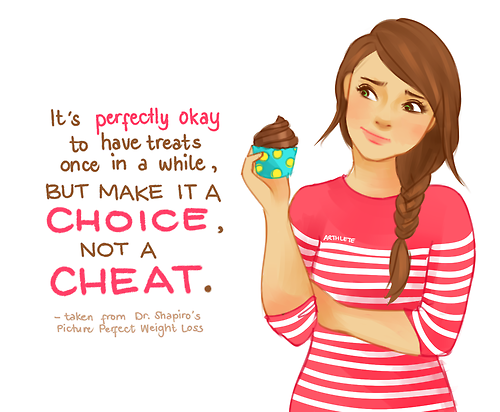
I don't think I have experienced an uncontrollable craving in months. No, I don't eat sweets every day, nor junk food, ice cream, chips; in fact, I maintain a relatively "healthy" and "clean", micronutrient-dense diet simply because I find no desire to constantly have sweets.

Image source: arthlete.tumblr.com
Funny thing is, during my depths of my eating disorder, I used to constantly be craving sugary things, but I was too afraid to eat them, so instead I would binge on pounds and pounds and lettuce and spinach. I used to eat until I was so physically uncomfortable that I could no longer move and even then I wanted more. This happened every single time I put food in my mouth; once I started, I could not stop. I was absolutely terrified of becoming a binge eater. I didn't know what to do, but I would absolutely not let myself touch the calorie dense foods that I craved for fear of my binging episodes. 

But you know what? I didn't become a binge eating. I "recovered" from binge eating by simply eating more. Sounds paradoxical, doesn't it? But it's true.

Let me preface this by saying that yes, binge eating disorder is a very real and serious mental illness that warrants medical attention. However, it is impossible to develop binge eating disorder after a restrictive eating disorder; they are on complete opposite sides of the mental spectrum. 

Your body is a lot smarter than you think it is. When you restrict it of food and thus are energy imbalanced, it will do everything in its power to get you to eat more food. Ever heard of leptin and ghrelin? They are actually hormones that regulate hunger and energy expenditures based on how much body fat stores you have. So no, you are not crazy. You are not developing BED. Your body is hormonally trying to restore itself.

Image source: positivedoodles.tumblr.com
Paleo, rawtill4, fruitarianism, IIFYM, I really don't care what popular "healthy lifestyle" you want to argue with, but the bottom line successful message is the same: you have to eat enough calories. Paleo? Eat like a caveman, but eat enough. Rawtill4 or fruitarianism? You'd better be smashing in the bananas and dates because you need enough calories. And while these different healthy lifestyles do claim that they work because you are eating lots of x and not any y, I believe that they work simply because they make the person energy balanced. They fight against the mainstream mantra of "eat less to lose weight" and the terribly harmful 1200 calorie diet.

One of my favorite TEDTalks is from Sandra Aamodt and I highly recommend that you watch it. She advocates mindful eating, feeding your body when it it hungry, and set point theory.


So what is this "set point" theory? Your body has a natural, genetically predisposed weight and lean muscle to fat ratio that is performs best at and will self regulate to maintain it at that point. That means that when energy balanced, and only energy balanced, it will make you more hungry and eat more when it is below the set point and less hungry when it is above the set point.

Unfortunately, set point will not work when you are in starvation mode because at that point your body is in total chaos. It would much rather make sure that it is alive than maintain a certain weight and because it is not sure when you will feed it next, it will make you extra hungry and store any extra energy can obtain. That is why most people will overshoot their set point at first. That's why so many people will gain weight eating 2000 calories or less: they are energy imbalanced. Because of years of restriction, whether just some quick fix diet or an eating disorder, their body is unsure of when it will be fed next and so in an effort to stay alive, it will store energy.


So what do you do? You have to accept that weight gain and continue to eat ENOUGH calories in spite of it or else your body will never escape the devastating cycle. We have all heard it: "I gained back all the weight I lost and then some, so I have to diet again." It has been scientifically proven that most people who have dieted in the past weigh more than people who have never dieted in the first place. When people come out of diets and resume their normal eating habits, instead of using the food for energy as the body normally would, their bodies desperately hold onto it and so when dieters gain all their weight back, they freak out and diet once again, causing more starvation mode and perpetuating the vicious cycle.

The bottom line is simple: eat enough. Heal. Allow your body to take care of the rest.